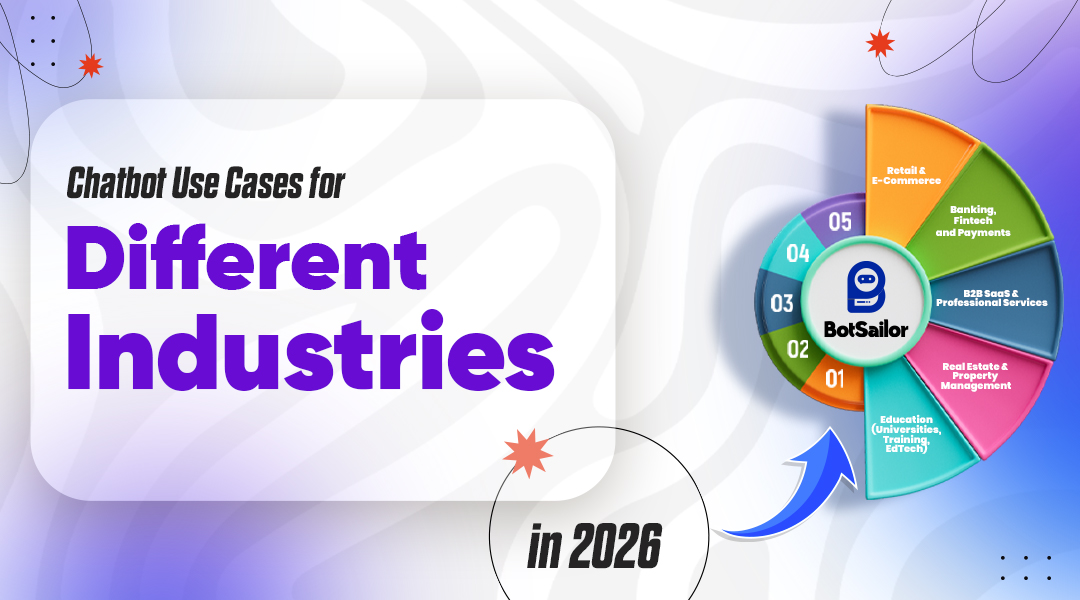
Chatbots in 2026 are no longer just for answering questions – they do real paintings.
Unlike the chatbots of 2020-2023, modern AI-powered chatbots are deeply connected to commercial enterprise workflows, capable of appearing multi-step tasks which includes booking appointments, processing orders, coping with KYC, handling claims and resolving stop-to-cease guide instances.
Three big adjustments will make chatbots greater precious in 2026:
From chat to action –Agent chatbots don't just reply; They operate the usage of stable workflows and railings.
Higher ROI strain –Companies now demand not handiest experimentation, however additionally measurable consequences together with value discount, quicker decision and sales increase.
Native messaging journeys –Customers need to browse, make decisions, pay, track and get hold of guides faster in chat, specifically on cell-first platforms like WhatsApp and in-app messaging.
To achieve success, groups have to consider chatbot use instances in four major categories:
Customer help automation
Revenue and conversions
operation and compliance
Empowerment for employees/marketers
By 2026, chatbots will have a real effect on industries along with retail and e-trade, banking and fintech, coverage, healthcare, travel and hospitality, schooling, telecom, manufacturing and logistics, real estate, B2B SaaS and public offerings – lowering charges, improving client experience and growing conversion prices.
The winning method is realistic:
Start with high-quantity, medium-chance use instances, then enlarge to regulated or complicated workflows with stronger controls.
Chatbots are not useful equipment in 2026 – they're enterprise operators, revenue drivers and virtual body of workers multipliers.
Why is 2026 different from "Chatbots in 2020-2023"
Three changes make chatbots more valuable in 2026:
1.From chat to perform (agent workflows).More organizations are designing bots that don't just answer—they solve: create cases, retrieve account data, schedule appointments, and run multi-step tasks with Rails. Gartner predicts rapid growth in autonomous problem solving in customer service as agent AI matures.
2.High expectations + ROI pressure.Many pilots failed because they were not connected to the actual workflow, had weak knowledge or lacked risk control – which means that poorly controlled agent projects are at risk of cancellation.
3.Message-based trading and service.Customers increasingly want to complete their journey within chat – browse, decide, pay, track, refund – especially in mobile-first areas and in channels like WhatsApp and in-app messaging.
The 2026-ready way to think about chatbot use cases
Before looking industry by industry, let's classify use cases into four categories:
1. Automation of Customer Support
Eliminate repetitive requests, reduce handling time, summarize context and move forward with complete history.
2. Revenue and conversion
Lead qualification, product discovery, personalized offers, cart recovery, ordering, upselling.
3. operation and compliance
Intake forms, identity verification, policy enforcement, documentation, audit trail.
4. Empowerment for employee/agent
Internal assistants who research policies, prepare responses, guide workflow and train employees.
A practical rule of thumb: start where the volume is high and the risk moderate, then expand to regulated/high-risk flows with stronger railings.
Chatbot use cases for different industries in 2026
Introduction:
Why 2026 is different from “chatbots in 2020–2023”
Three shifts are making chatbots far more valuable in 2026:
1. From chat to action (agentic workflows).More organizations are designing bots that don’t just answer—theyresolve: create cases, fetch account data, schedule appointments, and run multi-step tasks with guardrails. Gartner forecasts rapid growth in autonomous issue resolution in customer service as agentic AI matures.
2. Higher expectations + ROI pressure.Many pilots failed because they didn’t connect to real workflows, had weak knowledge, or lacked risk controls—leading to cancellation risk for poorly governed agentic projects.
3. Messaging-native commerce and service.Customers increasingly want to complete the journey inside chat—browse, decide, pay, track, return—especially in mobile-first regions and channels like WhatsApp and in-app messaging.
A 2026-ready way to think about chatbot use cases
Before we go industry-by-industry, categorize use cases into four buckets:
1. Customer Support Automation
Deflect repetitive questions, reduce handle time, summarize context, and escalate with full history. In every business if you provide great support , your business is gonna run great; it’s that simple. That’s why businesses have started using chatbots or you can say AI powered chatbot because it has proven better in terms of human support systems.
2.Revenue & Conversion
Lead generation, product hunt, target audience offers, abandoned cart recovery, bookings and so on.
3. Operations & Compliance
Intake forms, identity verification, policy enforcement, documentation, audit trails.
4. Employee / Agent Enablement
Internal assistants that search policies, draft replies, guide workflows, and train staff.
5.Integrating Multiple Platforms
AI-Powered chatbots like BotSailor have integrated multiple social media platforms in one place and users can get all their messages in one singleshared inboxthat eases up their hassle.
A practical rule:Start where volume is high and risk is moderate, then expand into regulated/high-risk flows with stronger guardrails.
Industry chatbot use cases in 2026
1)Retail & eCommerce
Nowadays, chatbots are mostly dependent onconversational commerce.Platforms likeBotSailoroffer multiple channel integration that truly assists in Retail & eCommerce and then support the full post-purchase lifecycle.
Top use cases
- Product hunt & guided selling:Firstly, ask some questions (i.e budget, use, size, style), then recommend SKUs and bundles.
- Order management:“Where is my order?”, delivery reschedule, address change, invoice download.
- Auto Returns/exchanges:Authentication checks, label creation, scheduling pickup.
- Cart recovery via chat:Sending notification to customers that they have left a cart open and not completed the purchase. LearnBotSailor’s Abandoned Cart Recovery.
- Loyalty & promo orchestration:Points balance, tier benefits, promo code application, reward redemption.
What makes retail bots win in 2026
- Tight integration withcatalog, inventory, shipping, and payments(so the bot can complete tasks).
- “Human takeover” for edge cases (damages, fraud flags).
- Messaging channel strategy (web + WhatsApp/Messengr) to keep friction low.
KPIs to track
- Converting potential customers through chatting
- Abandoned cart recovery notification
- Correctly tracking deflection rate for WISMO (Where Is My Order)
- Product or service return handling time
2)Banking, Fintech and Payments
AI Powered chatbots like BotSailor penetrate beyond common questions to ensure proper direction to customers. It can take necessary information from customers like KYC details, work on card related issues (lost, broken, insufficient funds) and forward accordingly, solving disputes and claims to general banking – all these with the mindfulness that it is working with sensitive information and data.
Top Uses Cases:
- Onboarding assistance:FAQ’s, proper guidelines, KYC forms fill-ups, card-issuing date-time, appointment booking etc.
- KYC guidance:Explaining requirements, collecting missing information (providing guidance if necessary), working on verification process with sample and authentication with proper authorization.
- Transaction alerts and dispute solving:Providing transaction alerts (i.e account debit and credit), shopping, issues updates, ticket resolving and so on.
- Fraud Education + Prevention:"Was this transfer risky?" + Tips and step-by-step protection. AI-driven identity is widely discussed in the banking context.
- Loan and credit service:pre-check of qualifications, document intake, repayment reminders.
Guardrails that matter
- Strong authentication/verification process for account-specific procedures
- Transparent guidelines for logging and signing-in
- Restrictions on "no advice" where necessary (giving complex financial advice to people)
KPIs
- Call center deflection
- Fraud report action from time to time
- dispute cycle time
- Compliance pass rate and audit preparedness
3) Insurance
The insurance business has integrated chatbots for claims intake, policy servicing and collecting structured details for claiming procedures.
Top use cases
·FNOL (First Notice of Loss):Guided intake, photo/document or authentication collection, issuance of claim number.
·Policy questions and answers + coverage explanation:What's covered and what’s not, deductibles, exclusions (with basic or exception context).
·Claim status updates:Reduce duplication "Any update?" Ring.
·Renewals and cross-selling:Relevant additional sales based on life events (new car/home).
·Agent assistance:Draft responses, summarize claim notes, suggest next actions.
KPIs
·Degree of completion for claims admission
·Average time to first adjustment touch
·Reopening rate (indicative of poor initial uptake)
·CSAT/NPS
4) Healthcare and clinics
Healthcare chatbots remain one of the most proven categories for administration-heavy workflows such as scheduling, reminders, intake and triage-style guidance (non-clinical). Common benefits include fewer no-shows and reduced workload at reception.
Top use cases
·Appointment booking + rescheduling + reminders:the "bread and butter" use case.BotSailor’s Appoint Booking Systemlets customers book appointments by using google calendar. You can specify business hours, holidays or specific day. Businesses can use maximum and minimum advance booking and clients have an opportunity of minimum booking cancellation window.
·Pre-travel intake:symptoms, history, form, insurance details.
·Navigation and wayfinding:"Where am I going?", "What should I bring?", and preparation instructions.
·Medication reminders and post-treatment follow-up:check-ins, compliance requests (with escalation rules).
·Triage guidance:Helps patients determine urgency and route to telehealth vs. clinic vs. emergency department (with careful disclaimers).
Healthcare-specific necessities
·Privacy and secured designs that act with local regulations and international laws
·Conserving of previous knowledge and replying accordingly
·Medical advice backed by proper investigation, research and studies
KPIs
·Reducing non-attendance
·Reduction of total volume
·High appointment booking rate
·Client satisfaction + less complaint rate
5) Travel and hospitality
Most of the travel agencies around the world are now integrating chatbots to deal with clients on the first hand. Its easy and super handy because chatbots are available 24/7 unlike humans. They train the chatbots in such a way that you will not be able to make a difference if it’s a human or not.
Top use cases
·Booking assistant:Room/flight selection, upgrades, additions, confirmations.
·Schedule interruption:flight delays, rebooking, refunds, compensation guidance.
·Pre-arrival assistance:Check-in instructions and guidance, transportation options, local recommendations and suggestions.
·Service requests during your stay: Cleaning, maintenance, late check-out.
·Loyalty support: star-points, customer tier status, benefits and promo offers.
New in 2026: AI agents and direct booking
AI Powered chatbots
Travel brands are investing in experiences and technology to increase direct bookings and create AI agents that can book autonomously.BotSailor’s AI Powered Chatbotsare highly efficient and easy to use integrate. You can not really differentiate if you are talking to a human or a chatbot. Theintent detection systemlet the chatbot know about the intent of the user and act accordingly.
KPIs
·Ordering conversions directly from chat
·Early solutions during disturbances
·Upsell engagement rate
·CSAT
6) Education (Universities, Training, EdTech)
Students and parents are using chatbots integrated by educational institutions throughout the world. Chatbots are answering student’s questions, assisting in admission and also are being used for administrative purposes.
Top use cases
- Admissions & enrollment:Program matching, eligibility, deadlines, document checklists.
- Student services:Timetables, policies, campus services, financial aid info.
- Learning support:Practice quizzes, concept explanations, resource recommendations (with academic integrity rules).
- IT helpdesk:Password reset workflows, device setup, LMS support.
- Career services:Resume Q&A, interview scheduling, job matching.
KPIs
- Lead-to-application conversion
- Ticket deflection for student services/IT
- Response time during peak season
- Student satisfaction
7) Telecom & Utilities
These industries have huge volumes of repetitive requests—making them ideal for automation.
Top use cases
- Plan selection and upgrades:Personalized recommendations based on usage.
- Billing support:Bill explanation, payment link, reminders, installment plans.
- Outage communication:Real-time status, ETAs, incident updates.
- Service activation and troubleshooting:Router resets, line tests, technician scheduling.
- Collections with empathy:Structured flows that preserve brand trust.
KPIs
- Billing-contact rate reduction
- First-contact resolution
- Technician dispatch efficiency
- Churn reduction
8) Manufacturing, Logistics & Supply Chain
In 2026, industrial chatbots show value ininternal enablementandpartner communication.
Top use cases
- Order and shipment visibility:Status, delays, documentation, customs info.
- Procurement assistant:Supplier FAQs, RFQ intake, quote follow-up.
- Inventory Management:AI-powered chatbots use natural language to automate stock monitoring throughproduct catalogmanagement, provide real-time data, trigger reorders, track shipments and handle routine queries.
- Maintenance and safety:SOP lookup, incident reporting, checklist guidance.
- Warehouse workflows:Pick/pack exceptions, inventory queries, dock scheduling.
- Quality reporting:Intake of defect reports with photos and structured metadata.
KPIs
- Fewer “where is my shipment?” emails
- Reduced downtime via faster troubleshooting
- Faster RFQ cycle time
- Compliance completion rate
9) Real Estate & Property Management
People are using chatbots in Real-estate & Property Management by showing catalog to clients, automated appointment bookings, clearing doubts as well as payment systems.
Top use cases
- Lead qualification:Budget orientation, location fixation, move-in or purchase date and other required steps.
- Tour scheduling:Appointment booking, confirmation, guidance, hotel bookings, reminder and rescheduling.
- Tenant support:Maintenance requests, rent payment links, policy Q&A.
- Document workflows:Lease document checklists, e-sign routing, status updates.
- Community concierge:Amenities, rules, visitor parking.
KPIs
- Lead response time
- Tour booked rate
- Maintenance ticket cycle time
- Tenant satisfaction
10) B2B SaaS & Professional Services
For SaaS, chatbots have matured intosupport + sales + onboarding copilots.
Top use cases
- Tier-1 support automation:Troubleshooting, account settings, billing.
- Knowledge-grounded answers:“How do I do X?” using docs and changelogs.
- Onboarding assistant:Setup checklists, milestones, nudges.
- Lead capture and qualification:Route to the right sales rep with context.
- AI Agent assistfor support teams:Summaries, draft replies, case notes. Salesforce reports broad adoption of AI/agents in service operations. BotSailor’s AI Agent with Intent Detection capabilities makes it the smartest and most efficient way for customers and businesses where you can train it by data, FAQs, Files, URLs, HTTP APIs and Google sheets.
KPIs
- Time-to-first-response
- Ticket deflection
- Onboarding completion
- Expansion and churn metrics
11) Public Sector & Citizen Services
Governments use chatbots forinformation accessandintake workflows.
Top use cases
- Service navigation:Eligibility checks, required documents, deadlines.
- Appointment scheduling:Offices, consular services, licensing centers.
- Benefits and tax Q&A:Grounded guidance with links to official forms.
- Incident reporting:Potholes, utilities, safety reports.
- Multilingual access:Improve accessibility at scale.
KPIs
- Call volume reduction
- Resolution time
- Accessibility metrics (language coverage, availability)
- Citizen satisfaction
Studies & Statistics
Market Size & Future Growth:

Current Adoption Statistics:

ROI Financial Impact Statistics:

Future Predictions & Trends:


Chatbot Conversion Statistics:

Explore Knowledgebase:
Visit Website Chat Widget Section