
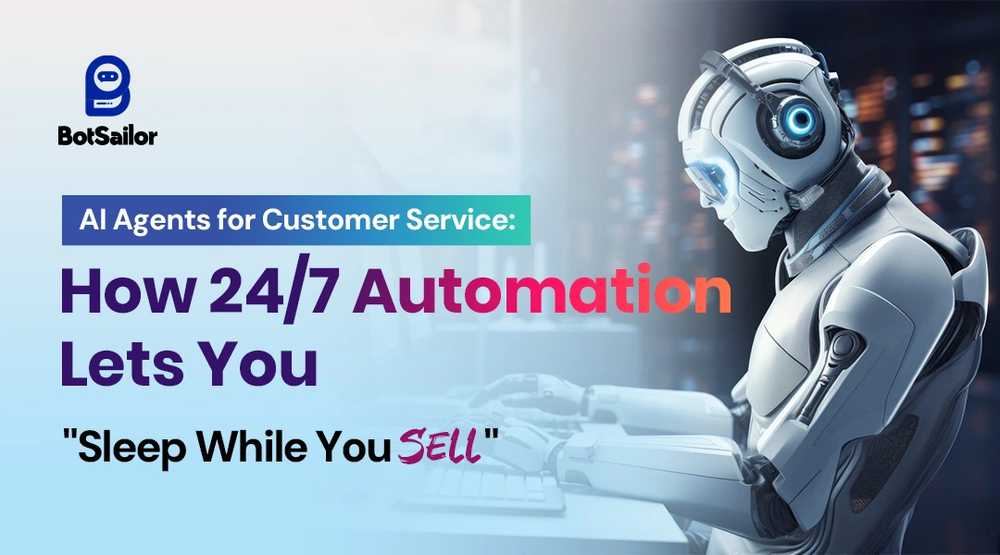
AI agents for customer service enable small businesses to provide instant, 24/7 sales and support without hiring night-shift teams.
Unlike basic chatbots, AI agents understand user intent, use real business data, recover abandoned carts, and close sales on messaging channels like WhatsApp.
This guide explains how SMBs and eCommerce stores can build a no-code AI agent, along with the key metrics, costs, and risks to consider before scaling.
Introduction — When Business Hours Quietly Kill Sales
It’s 2:00 AM. A potential customer browsing your website or social media asks, “Do you ship to my city?”—or “Is this compatible with model X?” If you're asleep, that message sits unanswered. By morning, the customer has likely moved on. This silent phenomenon — let’s call it Lead Rot — kills countless sales and erodes trust.
In 2026, customers expect instant help. Response time is often the deciding factor between a sale and a missed opportunity. That’s why AI agents for customer service are no longer a luxury — they are how modern businesses deliver 24/7 support, capture leads, and close sales automatically.
In this blog, you’ll learn:
- What modern AI agents are and how they differ from old-school chatbots.
- Real business use cases where 24/7 automation drives sales and support.
- A practical, no-code tutorial (step-by-step) to set up a 24/7 AI agent with BotSailor.
- Key metrics to track and caveats to keep in mind.
What Is an AI Agent (Not Just a Chatbot)
| Features | AI Agent | Traditional Chatbot | Human Support |
|---|---|---|---|
| Availability | 24/7, always online | 24/7 but limited logic | Business hours |
| Understands intent | ✅ Yes (context-aware) | ❌ Keyword-based | ✅ Yes |
| Uses business data | ✅ PDFs, FAQs, catalogs | ❌ Hard-coded | ⚠️ Manual |
| Executes actions | ✅ Orders, routing, follow-ups | ❌ Mostly replies | ⚠️ Slow |
| Scalability | ✅ High | ⚠️ Limited | ❌ Expensive |
| Cost efficiency | ✅ High for SMBs | ✅ Low but basic | ❌ High |
| Best for | Sales + support automation | Simple FAQs | Complex cases |
AI Agent vs Chatbot vs Human Support (Quick Comparison)
What Are AI Agents for Customer Service?
AI agents for customer service are automated software assistants that provide 24/7 customer support and sales interactions by understanding user intent, using business data, and executing actions like answering questions, recommending products, and routing conversations — without human intervention.
Is an AI Agent Better Than a Chatbot?
Yes. An AI agent is more advanced than a traditional chatbot because it understands intent, uses real business data, and can execute actions like order processing or cart recovery. Chatbots typically follow fixed rules and struggle with complex or multi-step requests.
How an AI Agent Works 24/7 (In Simple Terms)
- A customer sends a message (WhatsApp, website, social).
- The AI agent detects the user’s intent (support, purchase, tracking).
- It pulls answers from your business data (FAQs, catalogs, policies).
- The agent replies instantly or performs an action (show product, recover cart).
- If the query is complex, it hands off to a human agent automatically.
This type of 24/7 customer support automation offers context-aware, intelligent, and reliable interactions — suitable even for small businesses.
Why 24/7 Customer Support Automation is a Game Changer
Many business owners fear losing control. "What if the bot says something wrong?"
This is where the BotSailor Mobile App changes the game. While the AI handles the heavy lifting, you have full visibility from your pocket. You can watch conversations happen in real-time. If you see a high-value client, you can jump in and take over. You aren't stepping in because you have to; you're stepping in because you want to.
Why AI Agents Matter for Small Businesses
For small and mid-sized businesses, AI agents help by:
- Capturing leads outside business hours
- Reducing missed sales due to slow replies
- Automating repetitive support questions
- Recovering abandoned carts automatically
- Scaling customer service without hiring more staff
The “Zero-Wait” Expectation
Customers are used to instant gratification — instant answers, instant checkout, instant support. Slow response times kill conversions and damage brand trust. An AI agent, however, is always awake — answering FAQs, qualifying leads, handling orders — even when you’re asleep.
Benefits include:
- Immediate replies → more qualified leads
- Reduction in response lag → lower bounce/abandonment
- Consistent availability even on holidays/weekends → better brand image
Where AI Agents Help: Real Use Cases for Sales & Support
Here are concrete scenarios where AI agents pay off:
- Instant lead qualification — answer basic questions, gather lead data, schedule demos or follow-ups.
- Cart recovery & abandoned checkout automation — gently nudge customers who left without purchasing.
- Product recommendations & upsells — based on user inputs (preferences, budget).
- Order tracking & COD verification — automatically update customers, reduce fraud & return risks.
- Appointment/booking flows — use interactive forms inside chat to book meetings or services.
- FAQ & support automation — answer repetitive queries (shipping, returns, policies) instantly.
For small businesses, these use cases mean fewer lost leads, faster conversions, and less manual work.
Why WhatsApp — The New Commerce Channel

For SMBs and eCommerce stores, WhatsApp chatbot for sales outperforms email and web chat because messages are opened faster, replied to sooner, and feel personal rather than transactional.
Instead of directing users to external pages, modern commerce increasingly happens inside chat apps. With WhatsApp business automation, customers can:
- Browse catalogs
- Ask questions
- Place orders
- Get updates — all inside chat
This removes friction: no slow web pages, no lost sessions. For buyers used to messaging apps, it feels natural — and far more seamless than traditional checkout funnels.
Step-by-Step Tutorial: Build Your Own 24/7 AI Agent in BotSailor (No Code)
Follow these steps in BotSailor to build a fully functional AI agent for sales + support automation:
Step 0 — Prep your data
- Gather existing product info: catalogs, FAQs, pricing CSVs, return policy PDF or URL.
- List 3–5 typical user needs (shipping question, product info, order status, cart recovery, lead qualification).
Step 1 — Create a new agent
- In BotSailor dashboard → “New Agent / Project” → name it “virtual support”.
- Select channel: WhatsApp Business (or preferred chat channel).
- Prompt the newly created AI Agent (virtual support)

Step 2 — Build intents & responses
- Define intents such as shipping_query, product_info, order_status, abandoned_cart.
- For each intent, add sample user phrases (3–5 variations).
- Map each intent to a response flow (text + quick reply buttons).

Step 3 — Upload business data

- Upload your FAQs (PDF/URL).

- Upload price lists or catalog data (CSV or via integration).
- Add generic policy docs (shipping, returns, delivery time, payment methods).
Step 3.1 — Design conversation flows
- Example: For product_info — ask clarifying questions (color, size, version) → respond with product card + price + CTA link.
- For abandoned_cart — if user doesn’t complete checkout in X minutes → send a follow-up message with a discount or reminder.
- Add human handoff nodes for complex queries (bulk orders, customizations).
Step 3.2 — Configure catalog & UX (for WhatsApp)
- Link your product catalog so the bot can pull product cards.
- Use quick-reply buttons, list messages, and structured responses for smoother UX.
Step 4 — Test, Publish & Monitor
- Check bot’s responses. Adjust intents, responses, fallback messaging.
- After testing, publish the bot.
- Monitor real conversations via the omnichannel shared inbox. Note common queries, drop-offs, and human handoffs.
Step 5 — Track metrics & iterate
- For small businesses, even a 5–10% improvement in response speed or cart recovery rate often offsets the entire automation cost within weeks.
- Key metrics: First Response Time, number of human handoffs, conversions from bot-to-order, cart recovery rate, user satisfaction feedback.
- Each week, review logs. Improve or retrain the bot based on missed questions or errors.
What to Measure (KPIs) for Success
Set up a simple spreadsheet or dashboard to track:
- First Response Time (FRT) — average time to first reply
- Lead → Sale Conversion Rate (via bot conversions)
- Abandoned Cart Recovery Rate (via bot follow-ups)
- Support Ticket Volume Reduction — % of tickets handled without human support
- Customer Satisfaction (if feedback enabled) — simple survey after chat close
Tracking these over 4–12 weeks shows real impact.
Realities, Costs & Things to Watch Out For
Automation is powerful — but imperfect. Be aware of:
- Token / usage costs — AI models (if used) consume compute; heavy usage costs more.
- Possible errors or “hallucinations” — bots may misinterpret ambiguous queries or give inappropriate answers. Use BotSailor’s ‘visual builder’ wisely and test thoroughly.
- Dependence on third-party platforms — if WhatsApp or API access changes or is limited, automation may break.
- Broadcasting & compliance risk — avoid spam; always use WhatsApp’s broadcast rules and consent-based marketing.
- Need for maintenance — update data (pricing, stock, FAQ) and retrain intents often.
When AI Agents Are Not the Best Choice
AI agents may not be ideal when:
- Conversations require legal or medical advice
- Issues involve disputes, emotional sensitivity, or escalations
- Business data is outdated or poorly structured
- There is no plan for human fallback
So, Automation isn’t set & forget. It’s set, monitor and improve.
Conclusion: The Future is Hybrid
The most successful businesses don't replace humans with AI. They augment humans with AI.
BotSailor allows you to automate the noise so you can amplify the value. Whether you are an E-commerce Store Owner tired of abandoned carts, or a Marketing Agency looking to Whitelabel this tech and resell it to local clients, the tool is ready. The market expects a reply in under 5 minutes — even at midnight. With BotSailor, your AI sales agent works 24/7 so you don’t have to.
👉 Ready to build your first AI agent? Start your free trial on BotSailor today.