
How To Migrate To WhatsApp Business Cloud API
TL;DR:
This blog explains how to migrate your number to Meta WhatsApp Cloud API and why that move matters for growth. It’s not just about switching systems — it’s about setting up a proper WhatsApp Cloud API setup that connects with CRM API integration, ecommerce API integration, and other API integration solutions.
With the right custom API integration and the benefits of unified API for B2B integrations, businesses can automate follow-ups, centralize customer data, and turn conversations into measurable revenue.

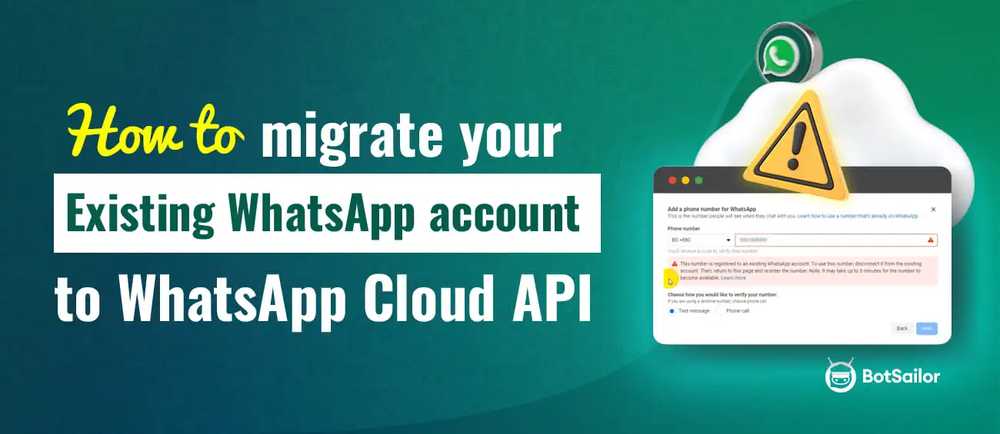
If you already have a WhatsApp account for your business and want to use the same phone number on a WhatsApp cloud API, then you have to migrate your existing WhatsApp account.

It's quite simple. We will show you how to do that.

When we try to add a number on WhatsApp Cloud API, it gives an error saying that,

“ This number is registered to an existing WhatsApp account. To use this number, disconnect it from the existing account. Then, return to this page and re-enter the number. Note: It may take up to 3 minutes for the number to become available.”

Image

As a result, we must first delete the WhatsApp account. To do so, use the WhatsApp Mobile app. From your WhatsApp on the Phone, click on the “Settings” and then go to the Account.

Image

From the account, click on "Delete My Account". As soon as we click on the Delete button, it will take us to the Delete option.

Image

Enter your phone number and click on the "delete" button.

Image

In the next step, just click on the NEXT button and then click on the "Delete My Account" button.

Image

Simply wait 3-4 minutes before attempting to add the number to the WhatsApp Cloud API again. That's it.

This is how you can migrate your existing WhatsApp account to the WhatsApp Cloud API.

If you have any further questions, please leave them in the comments section of this blog article. We will gladly respond to your inquiry.


Related Articles:

How to Set Up the WhatsApp Cloud API with BotSailor

WhatsApp Business Profile Settings for WhatsApp Cloud API

How to Register Phone Number to WhatsApp Cloud API for Verified Business


You may also watch our YouTube video tutorial:

Frequently Asked Questions

Find answers to common questions about this topic

Yes, you can migrate your existing WhatsApp number to WhatsApp Business Cloud API. However, you must first delete the number from the WhatsApp mobile app. Once the account is removed, the same number can be registered and connected through the Cloud API setup process.

Yes. When you delete your WhatsApp account to migrate to Cloud API, your chat history and media stored inside the app will be permanently removed. It’s important to back up any critical data before starting the migration process.

WhatsApp Cloud API offers better scalability, improved reliability, official hosting by Meta, and easier integration with automation platforms. For growing businesses, it allows higher message volume, chatbot automation, and advanced marketing workflows.

Yes, for businesses that need automation and scaling. The standard WhatsApp Business app is designed for manual messaging, while Cloud API supports chatbot automation, bulk messaging (within policy), CRM integration, and multi-agent support.

Meta WhatsApp Cloud API is the official API solution hosted by Meta that allows businesses to send, receive, and automate WhatsApp messages at scale. Unlike the standard WhatsApp Business app, it supports automation, CRM connections, and ecommerce API integration — making it ideal for growing businesses that need structured communication and measurable ROI.

The biggest benefits of unified API for B2B integrations include centralized data management, automated lead distribution, synchronized communication across platforms, and improved reporting. Instead of managing multiple disconnected tools, businesses can operate from one integrated system — saving time and increasing efficiency.

Yes. Through CRM API integration, WhatsApp Cloud API can automatically sync customer data, track conversations, assign leads to sales teams, and trigger follow-ups. This ensures no lead is lost and improves overall sales pipeline performance.

Share this article:

(1) Comments

Leave a Comment